AIFOD Geneva Summit Panellists Debate Control Over Global South AI Credentials
Panellists at the AIFOD Geneva Summit 2026 debated vendor dependency, labour risks, and neutral validation frameworks for artificial intelligence credentials.
Disclosure: This story is based on material from AIFOD, the publisher of this site.
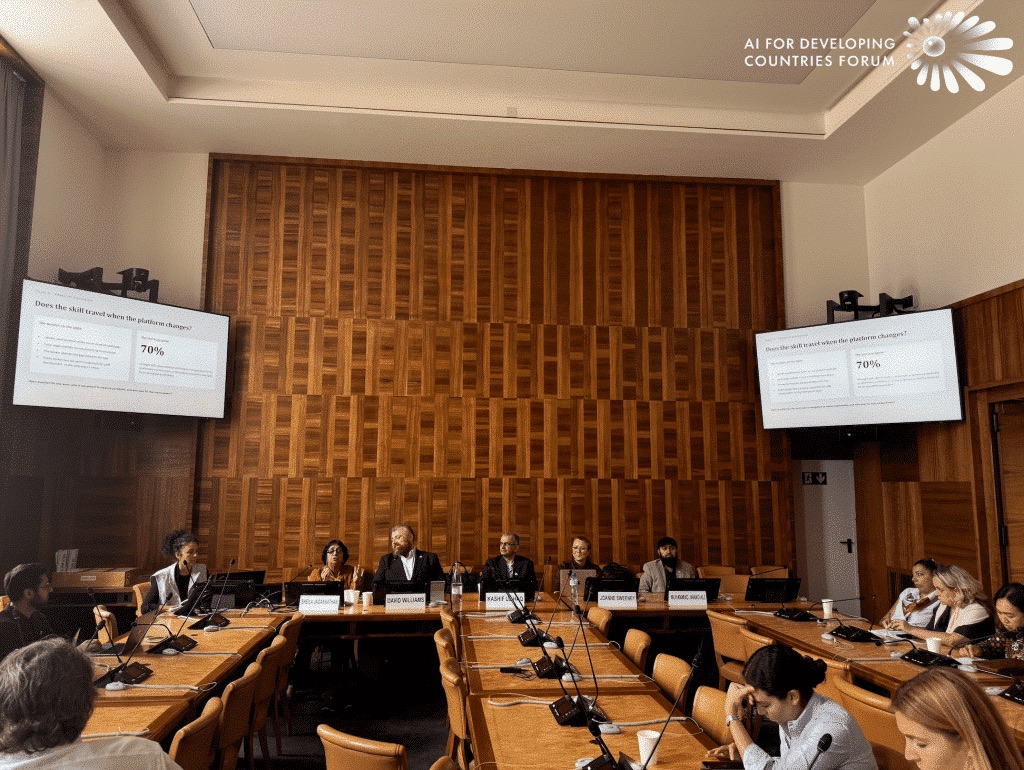
Commercial technology vendors risk exercising disproportionate influence over educational curricula and workforce planning across the Global South. During an IRB Labour panel organised by AIFOD, which publishes this site, speakers at the AIFOD Geneva Summit 2026 addressed the dilemma between rapid skills acquisition and technological sovereignty in developing markets.
Panellist Sheila Jagannathan cautioned against vendor lock-in, stressing that while commercial suppliers expand educational access swiftly, national priorities must not be subordinated to corporate platforms. Jagannathan argued that qualifications must remain portable, stackable, and interoperable, stating that "a credential should ultimately belong to the learner." She advocated for multi-stakeholder collaboration among governments, universities, and commercial suppliers, noting that workforce qualifications must travel with individuals rather than remaining restricted to single technology systems.
Practical Workflows and Vendor-Neutral Frameworks
Addressing the operational side of professional education, Joanne Sweeney emphasised that training should address concrete departmental problems and actual workflows rather than isolated software tutorials. Muhammad Jawad Ali noted that artificial intelligence literacy must encompass non-technical roles, including administration, human resources, and finance, as automation alters routine tasks across broader organisational structures.
To bridge these institutional demands, David Williams outlined a proposed vendor-neutral accreditation framework resulting from the IRB Labour discussions. Rather than delivering direct teaching, AIFOD would establish criteria to review existing qualifications based on pedagogical quality, regulatory relevance, portability, and workplace utility, enabling local institutions to preserve control over their educational offerings.
Sources
How this story was made
This story was rewritten with AI from an article published by AIFOD, linked below.
If you spot a mistake, write to hi@af.net. Read our editorial standards.